- In the Theatre
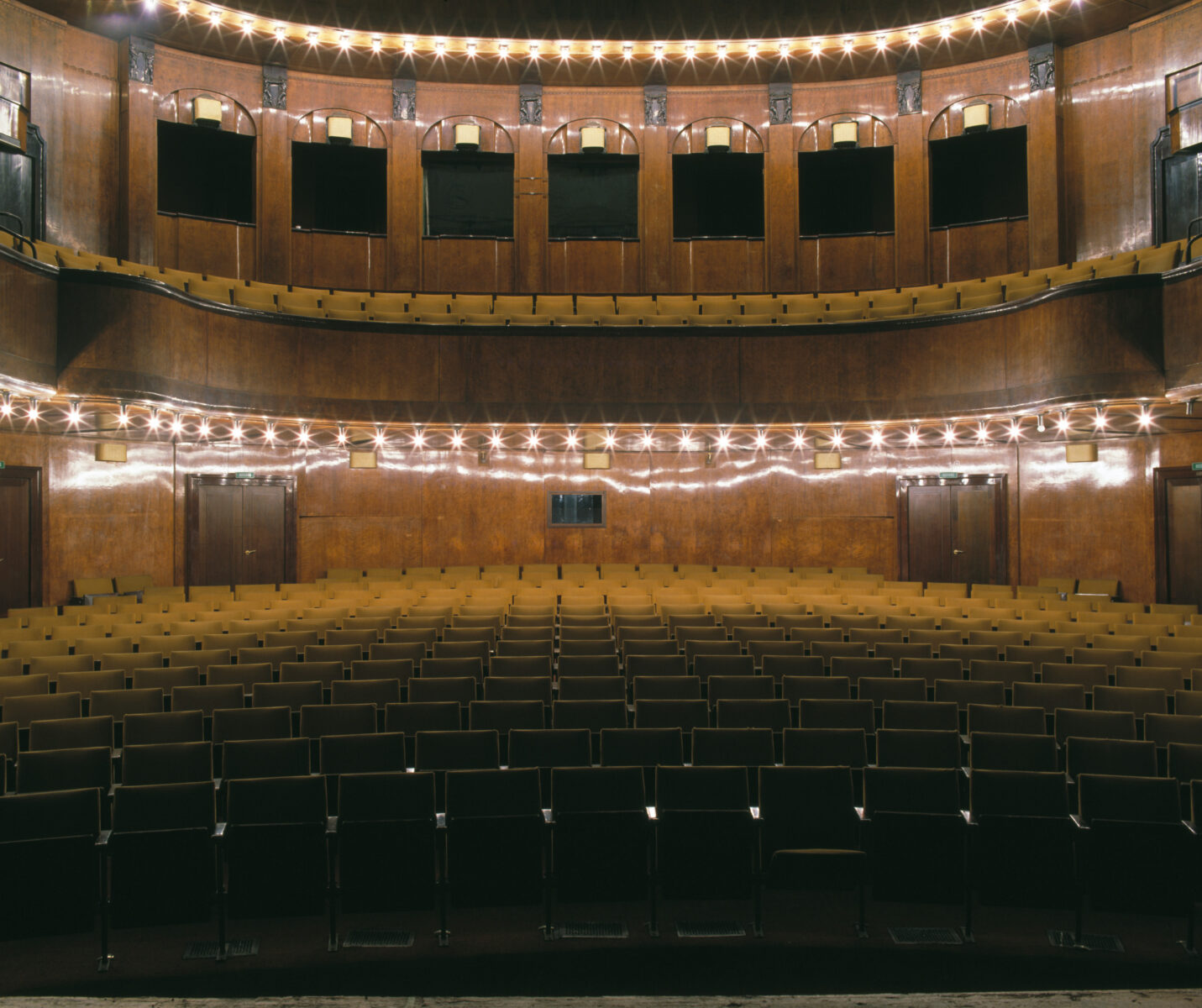
Raimund Kummer had equipped the Hebbel Theater, which had been deserted in the early 1980s, as a filming location for a "Woyzeck" TV adaptation. This outstanding location prompted Kummer and Hermann Pitz to invite more than 60 artists to a monumental 24-hour event. The Hebbel Theater was to be used in a variety of ways during a week of rehearsal and the 24-hour event. The time dimension as a vehicle for a sculptural structure was used again after the project AN DER BAR. The specific task of the project IM THEATER for the participating artists was the confrontation with found conditions of reception in a space determined as a theater.
The theater with its specific premises and its social significance played a special role in this production. Through the invitation communicated with the event brochure "You are in the theater with ..." the visitors were given the task of finding and assuming their own role during the event, since no conventional play was offered. The unexpected assignment of roles to the visitors brought irritation.
The project IM THEATER led to complications. The preparation conditions over a week and the associated slots of testing were set too short. There was too little organizational support for the individual contributions and this caused resentment among the artist colleagues. This under-resourcing was a symptom of the fact that the organizers had pushed their maxims far to the limit. From the experience of the project, the overload limit of BÜRO BERLIN's productions, which up to that point had been meager and based on self-organization as well as self-exploitation, became palpable to all participants. At the end of IM THEATER, Hermann Pitz withdrew from the conceptual development and organization of BÜRO BERLIN projects until further notice due to complete exhaustion and disappointment with the implications of the project.
The time dimension of 24 hours, the hardly available resources, the consciously chosen context of the theater as a mediation space led to an intensification, made a reflection on the own forms of activity necessary for the first time. This necessary reflection could only be set in motion again after a two-year break.
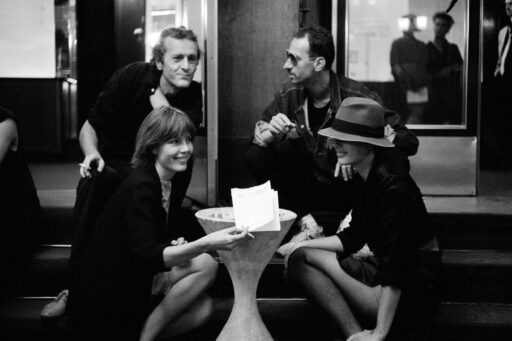
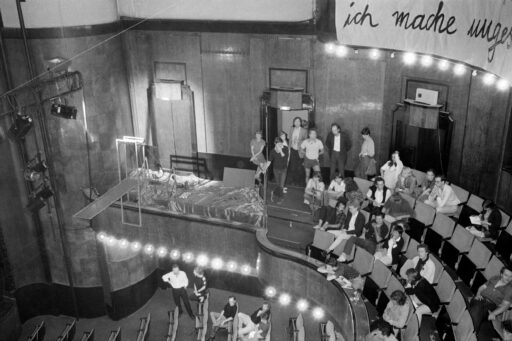
- 24-stündige Installationen und Bühnenstücke
- Theaterentrée – Boris Nieslony
- Foyer – Michael Morris, Vincent Trasov
- Foyer – Olaf Metzel
- Theater bar 1 – Angelika Margull, Axel Schäfer
- Theater bar 2
- Wardrobe – Harald Klingelhöller, Wolfgang Luy
- Wardrobe – Mike Schäfer
- Loge – Bettina Sefkow
- Loge – Bogomir Ecker
- 2nd balcony, foyer - Folke Hanfeld, Fritz Rahmann
- 2nd balcony, foyer - Thomas Schulz
- 2nd balcony – Christine Hoffmann
- 2nd balcony – Karl-Heinz Eckert
- 1st balcony - Stephan Huber, Marie Eugenie Hinrichs
- Parquet - Wolfgang Luy
- Schedule and program of play
- 19:20 | Stage – Karl-Heinz Eckert
- 19:35 | Stage – Boris Nieslony, Wolfgang Luy, Bogomir Ecker
- 20:15 | Stage – Mike Schäfer
- 20:35 | Stage – Arthur Wicks
- 20:40 | Stage – Bogomir Ecker
- 20:40 | Stage - Bettina Sefkow
- 21:00 | Stage - Thomas Kapielski
- 21:50 | Stage – Karl-Heinz Eckert
- 22:30 | Stage – Bogomir Ecker
- 23:00 | Stage – Sven-Åke Johansson
- 00:30 Stage – Boris Nieslony
- 01:00 | Stage – Ernst Pitz
- 01:20 | Stage - Res Ingold
- 02:05 | Stage – Thomas Hornemann
- 02:20 | Stage - Christian van der Bourght
- 03:20 | Stage - Verena von Hugo
- 03:40 | Parquet - Silvia Steiger
- 04:00 | Stage – Geert Duintjer
- 04:45 | Stage - Boris Nieslony
- 05:00 | Stage – Michael C. Glasmeier
- 06:35 | Stage - Wolfgang Koethe and Hermann Pitz
- 06:55 | Stage - Ann Pionchon
- 09:10 | Stage - Hermann Pitz
- 09:40 | Stage - Leonie Bodeving
- 10:40 | Stage - Fritz Rahmann
- 11:10 | Stage – Folke Hanfeld
- 13:20 | Stage – Mike Schäfer
- 14:30 Foyer - Jean Claude Ruggirello
- 15:00 | Stage - Thomas Huber
- 16:00-18:00 Stage – Sven-Åke Johansson
- 18:00 | Stage – Richard Kriesche
- 19:00 | Stage - Closing picture